Beyond Sample Tracking: How a…
Everyone is hurrying around from…
Jaldee Health – Experience seamless healthcare that engages, optimizes outcomes!
Walk into most diagnostic labs in India today and you’ll find a strange contradiction. The machines are cutting-edge — fully automated analyzers, chemiluminescence platforms, digital microscopy. But the workflow connecting those machines to the patient is often still stitched together with registers, WhatsApp messages, sticky notes, and Excel sheets.
This mismatch is the single biggest bottleneck in Indian diagnostics right now. Labs have invested in world-class equipment but are still running on paper-era processes to manage the sample, the technician, the report, and the bill. The result: delayed turnaround times, misplaced samples, billing leakages, unhappy patients, and administrators who have no real-time visibility into what’s actually happening on the lab floor.
A Laboratory Information Management System, or LIMS, exists to close exactly this gap. But most conversations around LIMS software stop at “sample tracking” — as if barcoding a tube is the whole story. It isn’t. A modern LIMS is the operating system for your entire laboratory, and understanding what it actually does — and what to look for before you invest in one — can change how efficiently your lab runs for years to come.
A LIMS is often introduced to lab owners as “software that tracks samples.” That definition undersells it considerably.
In practice, a LIMS manages the complete lifecycle of a sample and the data attached to it — from the moment a patient walks in or a sample is collected at home, all the way through processing, quality checks, technician sign-off, doctor validation, and final report delivery. Along the way, it also has to talk to the billing system, the front desk, referring doctors, and increasingly, the patient’s own phone.
Think of it less as a tracking tool and more as the central nervous system of a diagnostic lab. Every test order, every barcode scan, every analyzer result, every approval, and every rupee billed passes through it. When it works well, nobody notices it — the lab simply runs smoothly. When it’s missing or poorly implemented, every one of those steps becomes a manual, error-prone task that eats into staff time and patient trust.
This is also why LIMS has become a serious topic for hospital administrators and lab owners, not just IT teams. The system you choose directly affects turnaround time, compliance readiness, technician productivity, and ultimately, patient retention.
Before looking at solutions, it’s worth being honest about the problems most labs are actually dealing with day to day:
Without a digital chain of custody, a sample’s journey from collection to result depends on people remembering to update a register or call another department. In a busy lab processing hundreds of samples a day, this simply doesn’t scale.
Handwritten labels, similar patient names, and manual re-labelling between departments are a recipe for mix-ups. Even a small error rate here has serious clinical and reputational consequences.
When billing isn’t tied directly to test orders, labs lose revenue to missed charges, duplicate discounts, or delayed invoicing — often without anyone noticing until the books are reconciled weeks later.
The same patient and test information often gets typed in multiple times — once at the front desk, again in the analyzer software, again in the reporting sheet. Every re-entry is a chance for an error and a waste of staff time.
Patients and referring doctors judge a lab primarily on how fast and how reliably it delivers results. Manual handoffs between collection, processing, and reporting stretch TAT far beyond what the equipment itself is capable of.
Without real-time data, lab managers often only find out about bottlenecks — an overloaded technician, a stalled department — after the damage is done to TAT.
NABL accreditation and NABH standards require traceable, auditable records at every step. Reconstructing this from paper logs during an audit is stressful, time-consuming, and risky.
Individually, each of these looks like a small operational hiccup. Together, they compound into slower service, higher costs, and a diagnostic experience that doesn’t match the quality of the equipment behind it.
This is where a well-designed LIMS — the kind built into platforms like Jaldee Health CRM’s LIMS module — changes the picture entirely, by connecting every stage of the lab workflow into a single, traceable system.
Every sample gets a digital identity the moment it’s registered, and that identity persists through collection, transport, receipt, processing, and reporting. At any point, staff can see exactly where a sample is and what stage it’s at — no phone calls to the lab floor required.
Barcoding removes the single biggest source of manual error: mislabeling. A scanned barcode ties a sample irrevocably to a patient record, and every subsequent action — receiving, processing, reporting — is logged against that same code.
Instead of manually routing samples to departments or machines, the system automatically assigns tests based on predefined rules, cutting down on delays caused by manual sorting.
Labs routinely offer bundled packages — health checkups, profiles for specific conditions, corporate wellness packages. Managing these as configurable packages rather than one-off manual groupings keeps pricing, reporting, and turnaround consistent.
Biochemistry, hematology, microbiology, and pathology each have distinct processes. A LIMS that supports department-specific workflows — rather than forcing a single generic flow — matches how labs actually operate.
Assigning tests to specific technicians, and tracking their pending and completed workload in real time, gives lab managers the visibility they need to rebalance work before it becomes a TAT problem.
Digital report approval. Multi-level approval — technician verification followed by pathologist or doctor sign-off — can happen digitally, with a clear audit trail, instead of physical files moving between desks.
Lab managers and administrators get a live view of samples in progress, pending approvals, TAT breaches, and department load — the kind of visibility that’s simply impossible with registers and spreadsheets.
When billing is tied directly to the test order at the point of registration, there’s no gap for missed charges or manual re-entry errors. Every test ordered is a test billed.
For labs and hospitals operating across multiple locations or collection centers, a LIMS needs to consolidate data centrally while still allowing branch-level operations — so management gets one view of the business, not five disconnected ones.
Automated SMS or app notifications for sample collection, processing status, and report readiness reduce the number of “is my report ready?” calls the front desk has to field, while improving the patient’s overall experience.
Taken together, these capabilities don’t just digitize the existing workflow — they remove the manual handoffs that were causing delays and errors in the first place.

This is where a well-designed LIMS — the kind built into platforms like Jaldee Health CRM’s LIMS module — changes the picture entirely, by connecting every stage of the lab workflow into a single, traceable system.
Every sample gets a digital identity the moment it’s registered, and that identity persists through collection, transport, receipt, processing, and reporting. At any point, staff can see exactly where a sample is and what stage it’s at — no phone calls to the lab floor required.
Barcoding removes the single biggest source of manual error: mislabeling. A scanned barcode ties a sample irrevocably to a patient record, and every subsequent action — receiving, processing, reporting — is logged against that same code.
Instead of manually routing samples to departments or machines, the system automatically assigns tests based on predefined rules, cutting down on delays caused by manual sorting.
Labs routinely offer bundled packages — health checkups, profiles for specific conditions, corporate wellness packages. Managing these as configurable packages rather than one-off manual groupings keeps pricing, reporting, and turnaround consistent.
Biochemistry, hematology, microbiology, and pathology each have distinct processes. A LIMS that supports department-specific workflows — rather than forcing a single generic flow — matches how labs actually operate.
Assigning tests to specific technicians, and tracking their pending and completed workload in real time, gives lab managers the visibility they need to rebalance work before it becomes a TAT problem.
Multi-level approval — technician verification followed by pathologist or doctor sign-off — can happen digitally, with a clear audit trail, instead of physical files moving between desks.
Lab managers and administrators get a live view of samples in progress, pending approvals, TAT breaches, and department load — the kind of visibility that’s simply impossible with registers and spreadsheets.
When billing is tied directly to the test order at the point of registration, there’s no gap for missed charges or manual re-entry errors. Every test ordered is a test billed.
For labs and hospitals operating across multiple locations or collection centers, a LIMS needs to consolidate data centrally while still allowing branch-level operations — so management gets one view of the business, not five disconnected ones.
Automated SMS or app notifications for sample collection, processing status, and report readiness reduce the number of “is my report ready?” calls the front desk has to field, while improving the patient’s overall experience.
Taken together, these capabilities don’t just digitize the existing workflow — they remove the manual handoffs that were causing delays and errors in the first place.
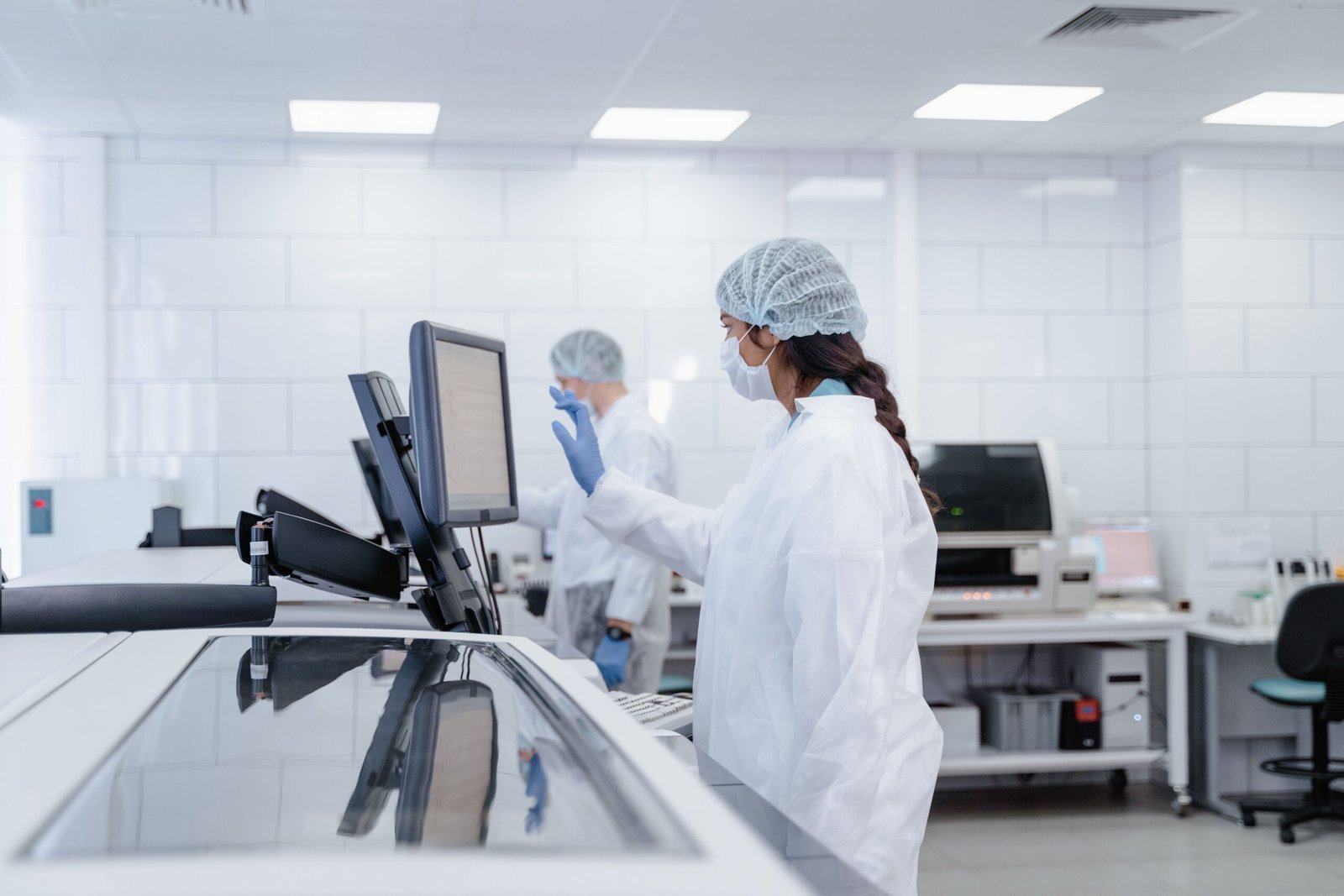
It’s tempting to evaluate LIMS software purely on its lab-floor capabilities — sample tracking, analyzer integration, report generation. But the labs and hospitals getting the most value from their software are the ones that chose a system built to connect with everything else around it: appointment scheduling, billing, EMR, patient communication, and referral management.
A LIMS that operates in isolation solves half the problem. It might speed up sample processing, but if billing, patient records, and communication still live in separate systems, you’ve simply moved the friction point rather than removed it. The real transformation happens when the laboratory becomes one connected part of a larger healthcare platform — where a patient’s lab order, their EMR record, their bill, and their report notification are all part of the same continuous flow.
This is precisely the gap Jaldee Health CRM’s LIMS module is designed to close. Rather than functioning as a standalone lab tool bolted onto a hospital’s existing systems, it’s built as part of a broader healthcare CRM — so sample tracking, technician workflows, billing, and patient communication share the same data, in real time, without duplicate entry or disconnected reporting.
Diagnostic labs don’t lose efficiency because of bad equipment — they lose it in the gaps between systems: the manual handoff between collection and processing, the re-typed data between the analyzer and the billing desk, the phone call a patient makes because nobody told them their report was ready.
A modern LIMS exists to close those gaps. Not just to track a sample from point A to point B, but to give lab owners and hospital administrators the visibility, automation, and connected workflow that today’s diagnostic volumes demand.
If you’re evaluating LIMS software for your lab, look past the feature checklist and ask a simpler question: does this system make my lab feel like one connected operation, or does it just digitize the same disconnected steps I already have? That answer will tell you more about your future turnaround times, compliance readiness, and patient satisfaction than any spec sheet ever will.
What is a Laboratory Information Management System (LIMS) used for?
A LIMS manages the complete lifecycle of a lab sample — from patient registration and barcode-based tracking through processing, technician assignment, quality control, report approval, and billing — replacing manual registers and spreadsheets with a single connected system.
How does a LIMS improve lab turnaround time (TAT)?
By automating handoffs between collection, processing, and reporting — and by giving lab managers real-time visibility into technician workload and pending approvals — a LIMS removes the manual delays that typically stretch TAT beyond what the lab’s equipment is actually capable of.
Is a cloud-based LIMS better than an on-premise one?
Cloud-based LIMS platforms reduce IT overhead, support easier multi-branch consolidation, and allow lab managers and pathologists to access dashboards and approvals remotely. For labs with more than one location or collection center, cloud deployment is generally the more scalable choice.
Does a LIMS help with NABL or NABH compliance?
Yes. A LIMS with digital audit trails, timestamped approvals, and quality control tracking makes it significantly easier to produce the traceable records that NABL and NABH accreditation require during an audit, compared to reconstructing history from paper logs.
How is Jaldee Health’s LIMS different from a standalone lab software? Jaldee Health CRM’s LIMS module is built into a broader healthcare CRM, so sample tracking, technician workflows, billing, EMR, and patient notifications share the same data in real time — rather than operating as a disconnected, standalone lab tool.
Looking to see how a connected LIMS could work for your diagnostic lab? Get in touch with the Jaldee Health team or request a demo of the LIMS module to explore a walkthrough tailored to your lab’s workflow. You can also explore our related guides on barcode-based sample tracking and lab billing automation once published.
Sequat, sagittis nulla at, sollicitudin lorem. Orci varius natoque penatibus et magnis dis partures ient montes.Great websites add great values to your business. From wire-framing to consectetu designing, we do it all.

Experience Innovative Healthcare Management Practices With Us!
Everyone is hurrying around from…
Utilising a CRM software for…
Many healthcare professionals trust Jaldee Health to manage their practices. Join our growing community and experience the difference that efficient, patient-centered management can make.